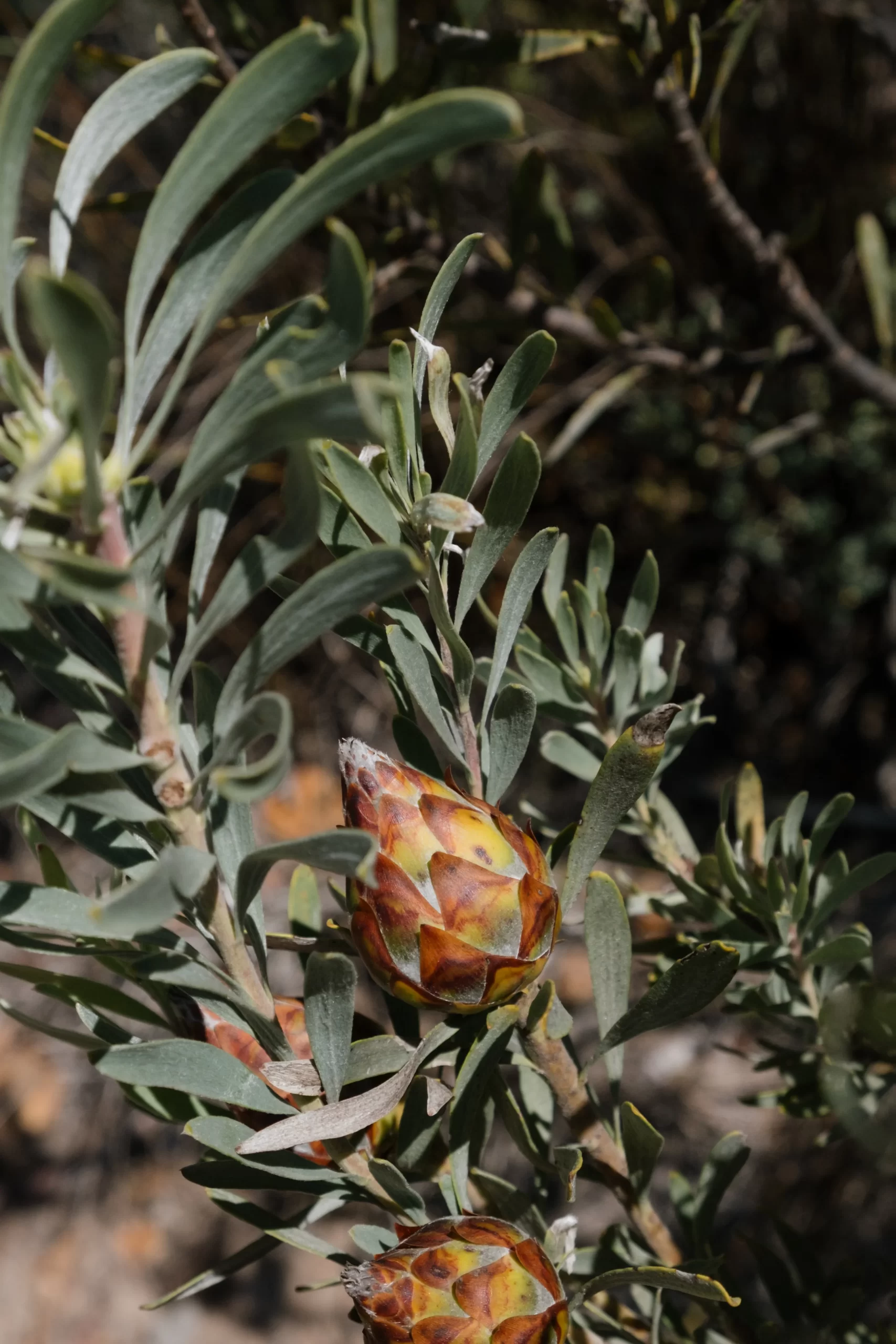
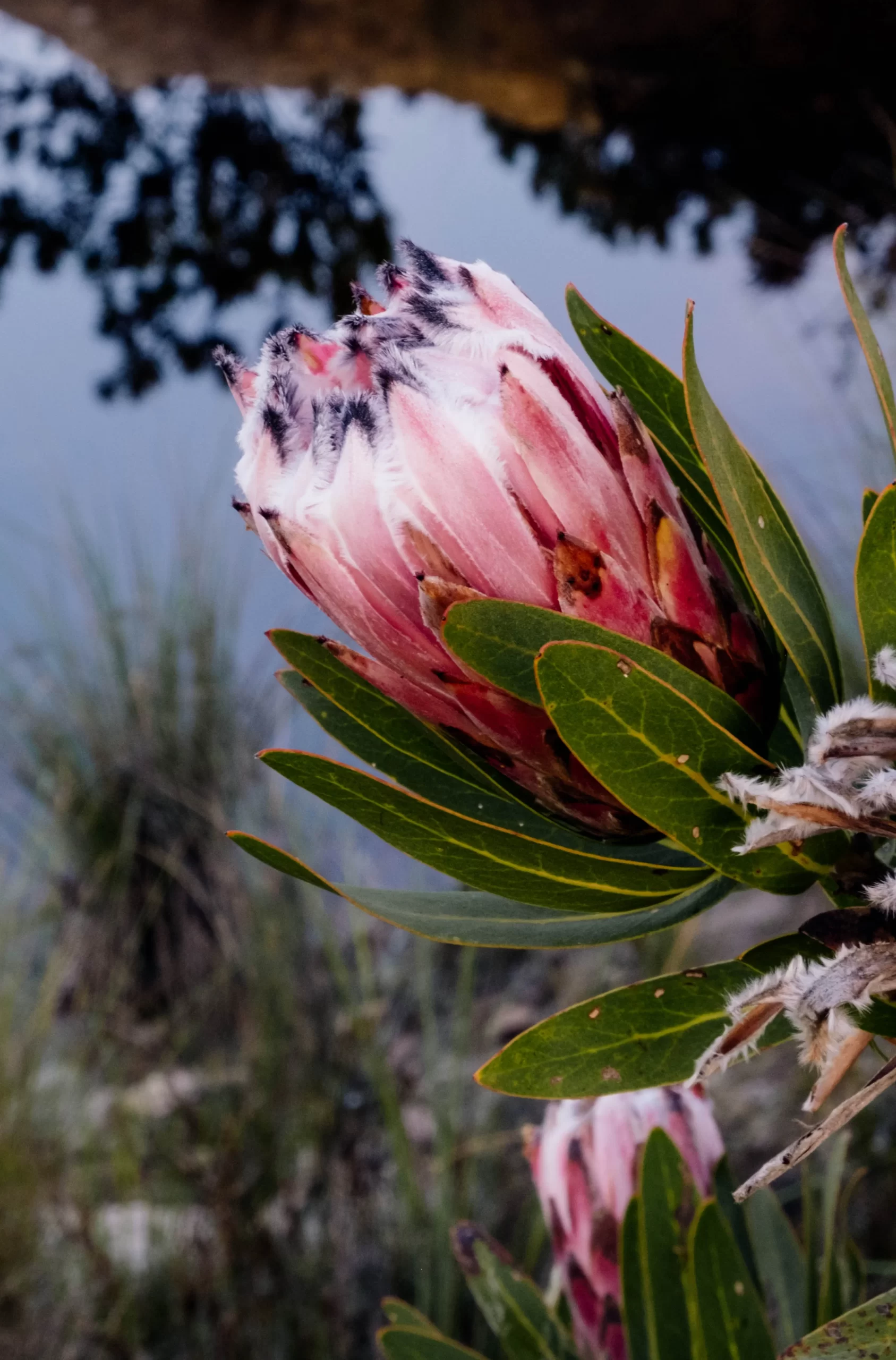
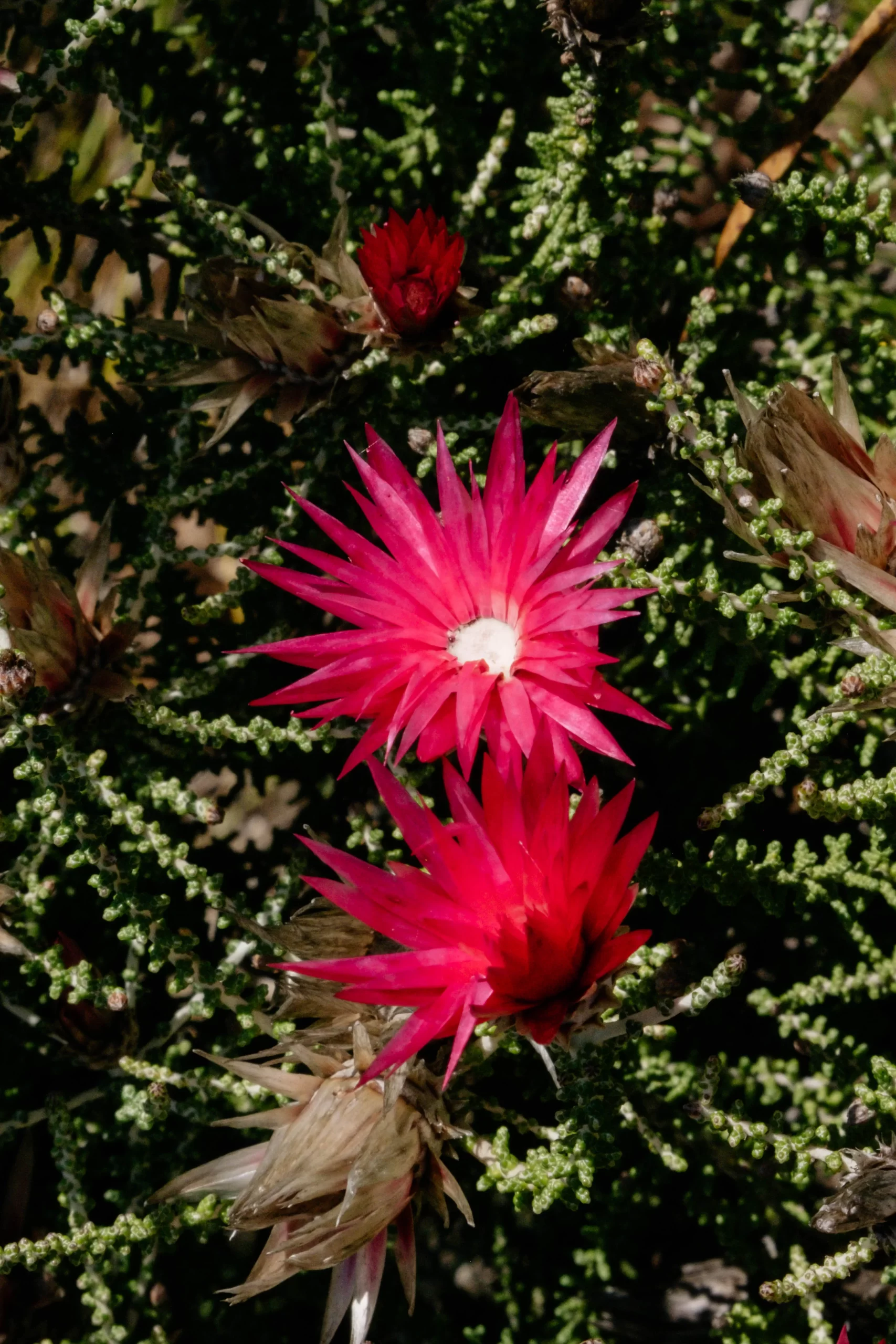
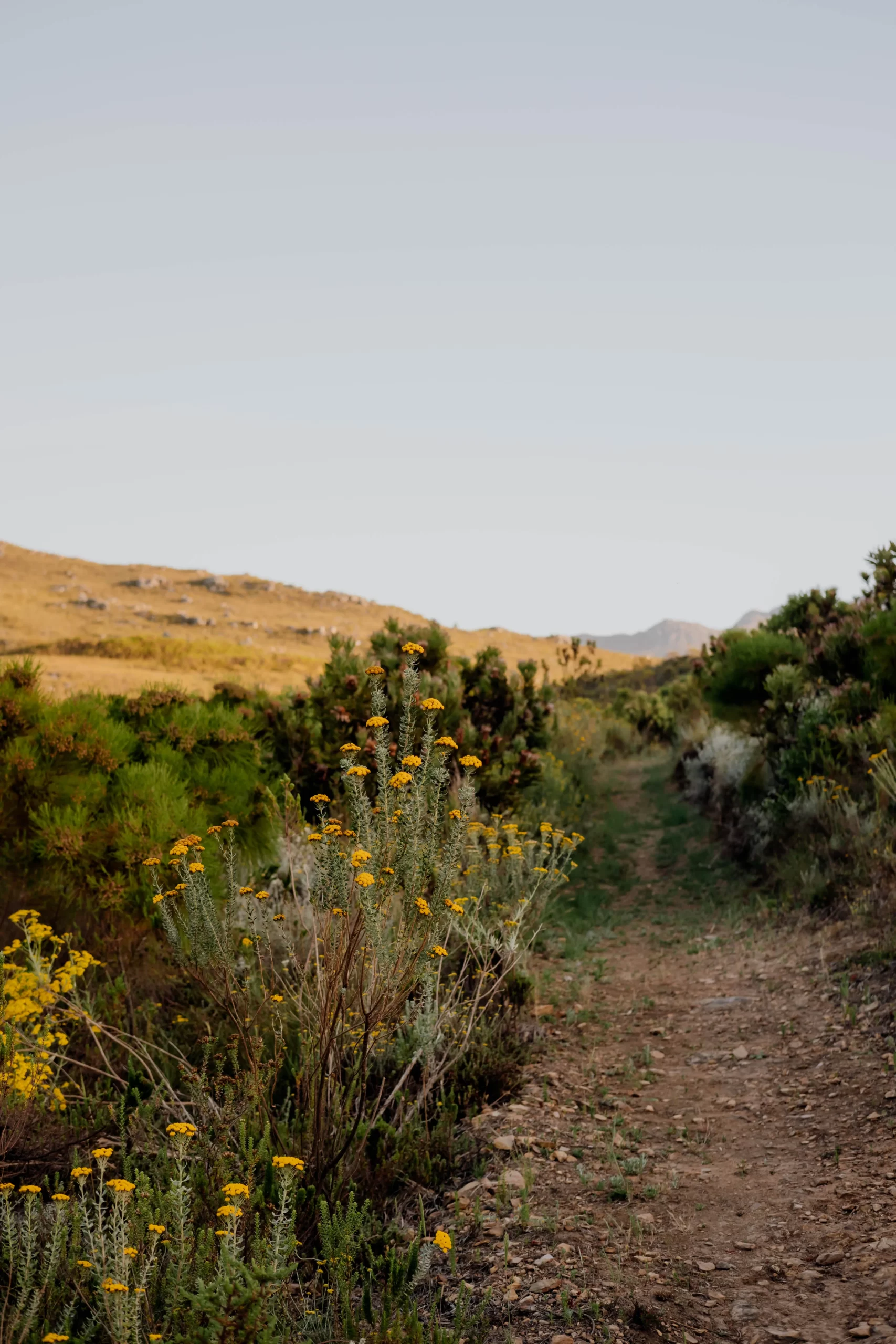
The Overberg region is a hotspot for fynbos diversity, with flowers blooming throughout the year, depending on the species and weather conditions. Here’s a breakdown of the fynbos flowering calendar to help you plan your visit:
January – March (Summer)
Highlights:
Protea repens (Sugarbush) – Late flowering.
Erica cerinthoides (Fire heath) – Vibrant red blooms.
Restios and other grass-like plants add texture to the landscape.
Best for: Dry but still colorful landscapes, with some proteas and ericas showing off.
April – June (Autumn to Early Winter)
Highlights:
Leucadendron species – Many cone bushes are at their most vibrant.
Protea cynaroides (King Protea) – Starts blooming around April.
Erica plukenetii – Colorful heathers emerge.
Best for: Cooler weather and early signs of winter blooms.
July – September (Winter to Early Spring)
Highlights:
Protea neriifolia and Protea compacta – Flourish during these months.
Aulax species – Adds unique, fine textures.
Erica mammosa and Erica multumbellifera – Showy pink and red blooms.
Bulbs like Watsonia and Babiana – Spectacular flowering displays.
Best for: Peak fynbos flowering season, coinciding with the Western Cape’s rainfall. This is one of the most rewarding times to visit the Overberg.
October – December (Spring to Early Summer)
Highlights:
Protea magnifica (Queen Protea) – Flourishes in early summer.
Leucospermum (Pincushions) – Bright and eye-catching.
Wildflowers (like daisies and gazanias) often mix with fynbos, creating vibrant displays.
Best for: Longer days, mild weather, and diverse blooms transitioning to summer.
Overall Best Times to Visit
July to September: For peak fynbos diversity and blooms, particularly proteas and bulbs.
October to November: For a mix of fynbos flowers and wildflower carpets.
Each season offers something unique, so it depends on your interests and the type of flora you want to see!